
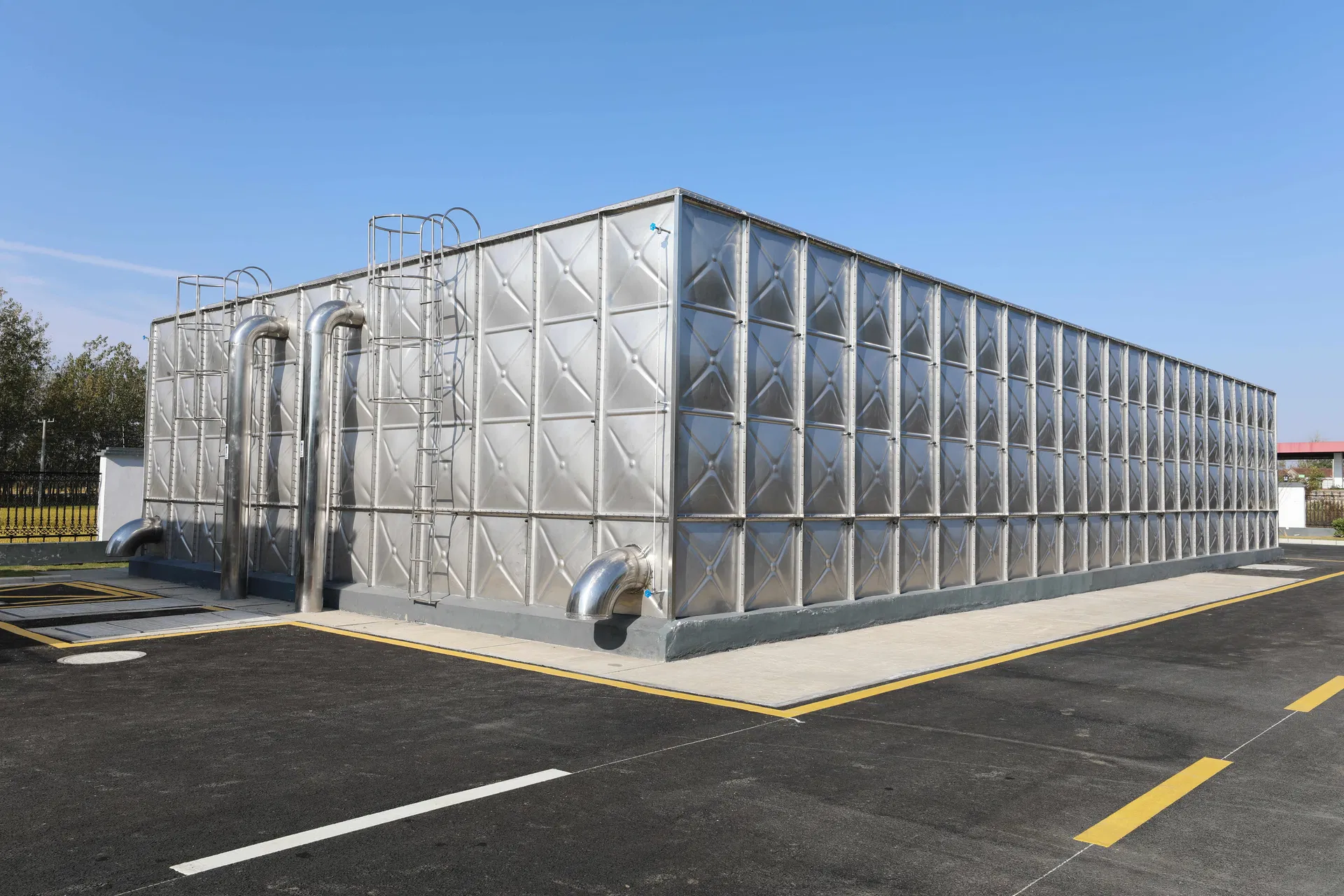
BDF (Bolted Dual-layer Fiberglass-reinforced) composite tanks represent an advanced solution for elevated and rooftop water storage. By combining stainless steel water-contact panels with a hot-dip galvanized structural frame, BDF tanks deliver the hygiene of stainless with the structural economy of galvanized steel — optimized for high-rise buildings, water towers, and fire protection reserves.
How BDF Tanks Are Constructed
The tank consists of three key layers:
- Inner water-contact layer — SUS304 or SUS316 stainless steel panels with embossed reinforcement
- Insulation layer (optional) — PU foam or rubber cork for thermal stability
- Outer structural frame — hot-dip galvanized Q235 steel panels and support members
Panels are bolted together on-site using food-grade EPDM gaskets. The modular design allows tanks to be assembled on rooftops and elevated platforms where crane access is limited — panels are lifted individually rather than as a monolithic vessel.
Key Advantages
Gravity Pressure for Fire Systems
Elevated tanks provide reliable water pressure during power outages — critical for fire sprinkler systems that must function when pumps fail. A tank elevated 30–50 meters provides sufficient head for most mid-rise sprinkler networks.
Corrosion Optimization
Only the inner surface contacts water, so SUS304/316 is used where it matters most. The external galvanized frame handles weather exposure at a fraction of full stainless steel cost.
Thermal Insulation
Optional insulation between layers reduces heat transfer, keeping stored water temperature stable and reducing energy costs for heated water systems.
Typical Applications
- Rooftop fire sprinkler reserves for commercial high-rises
- Elevated municipal water supply tanks on steel towers
- HVAC chilled and hot water buffer storage
- Industrial process water at height-limited sites
- Hospital and hotel domestic hot water storage
Structural Considerations
Elevated installations require structural engineering analysis of the supporting building or tower. Key factors include:
- Total weight when full (water = 1,000 kg/m³ plus tank self-weight)
- Wind and seismic loads on elevated structures
- Access for maintenance — internal ladder, manholes, and guardrails
- Foundation or rooftop slab reinforcement if needed
YATAI GROUP provides structural load data and foundation recommendations with every elevated tank quotation.
BDF vs Standard Stainless Steel Tanks
Full stainless steel tanks offer maximum corrosion resistance but at higher cost and weight. BDF composite tanks reduce project cost by 20–25% for elevated applications while maintaining stainless water-contact surfaces. For ground-level potable storage without elevation requirements, standard stainless or GRP tanks may be more economical.
Planning an Elevated Tank?
Share your building height, required pressure, and capacity. Our engineers will design a BDF composite solution with structural specifications.
Request BDF Tank Quote