
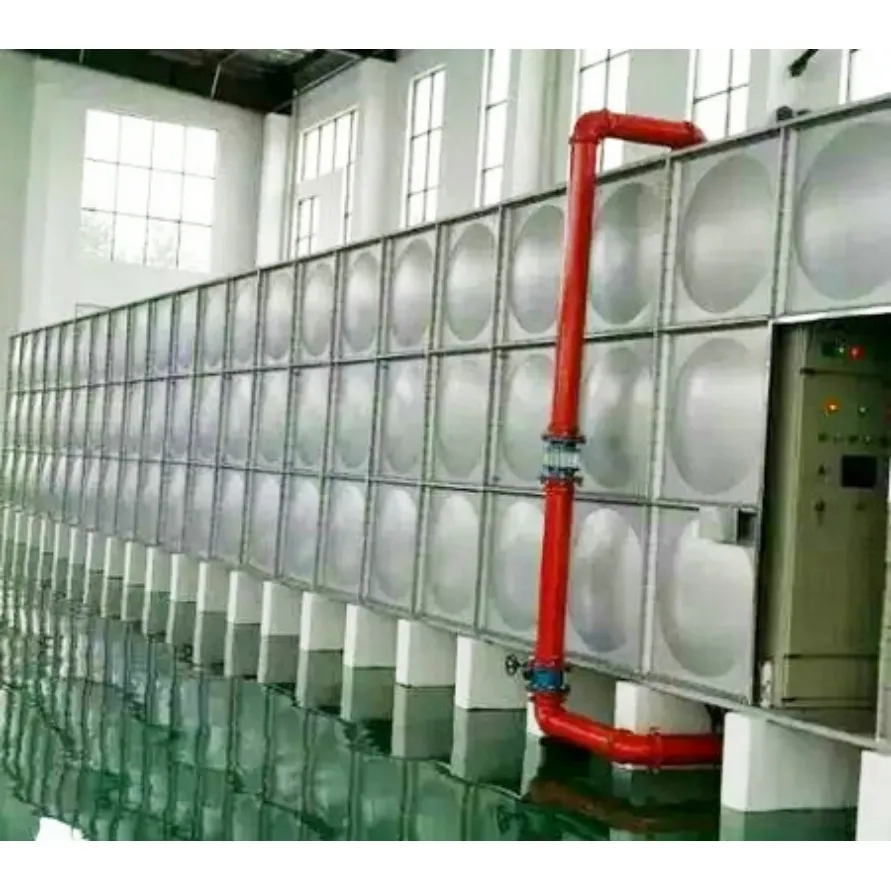
Choosing the right water storage tank is one of the most important decisions in any building, industrial, or municipal project. The wrong choice can lead to water quality issues, premature failure, compliance problems, and unnecessary costs. This guide covers the essential factors every engineer, contractor, and facility manager should evaluate.
1. Determine Your Required Capacity
Start by calculating your actual water demand. For fire protection systems, consult local fire codes — many jurisdictions require a minimum reserve based on sprinkler head count and duration. For domestic supply, estimate peak daily consumption and add a safety margin of 20–30%.
Modular sectional tanks offer a significant advantage here: panels are assembled on-site to create virtually any capacity from 1 m³ to over 10,000 m³. Standard panel sizes of 1m × 1m allow flexible dimensions that fit irregular spaces.
2. Choose the Right Material
Stainless Steel (SUS304 / SUS316)
Best for potable water, food processing, pharmaceutical facilities, and corrosive environments. SUS316 offers superior chloride resistance for coastal areas. Higher upfront cost but longest service life (30+ years).
GRP / SMC Fiberglass
Ideal for domestic and commercial applications where thermal insulation matters. Lightweight panels reduce structural load. Excellent for underground installation. Mid-range pricing with 20+ year lifespan.
Hot-Dip Galvanized Steel
Most economical option for large industrial tanks, agricultural irrigation, and fire reserves where potable water certification is not required. Effective rust protection through zinc coating.
3. Consider Installation Location
Above-ground tanks are easiest to install and maintain. Underground or semi-buried tanks save space but require structural engineering for soil loads — GRP/SMC tanks excel in these applications. Indoor installations (common in commercial buildings) need adequate floor load capacity and ventilation.
4. Evaluate Compliance Requirements
Verify that your tank meets local building codes, NSF/WRAS standards for potable water (if applicable), and fire department regulations. Request material certificates, weld inspection reports, and third-party testing documentation from your supplier.
5. Assess the Supplier
Look for manufacturers with ISO 9001 certification, established export track records, and in-house engineering teams. A reliable supplier provides detailed drawings, installation guides, and responsive after-sales support — not just a product catalog.
Need Help Selecting a Tank?
YATAI GROUP's engineers provide free project consultation. Share your requirements and get a custom recommendation within 24 hours.
Get Free Consultation