
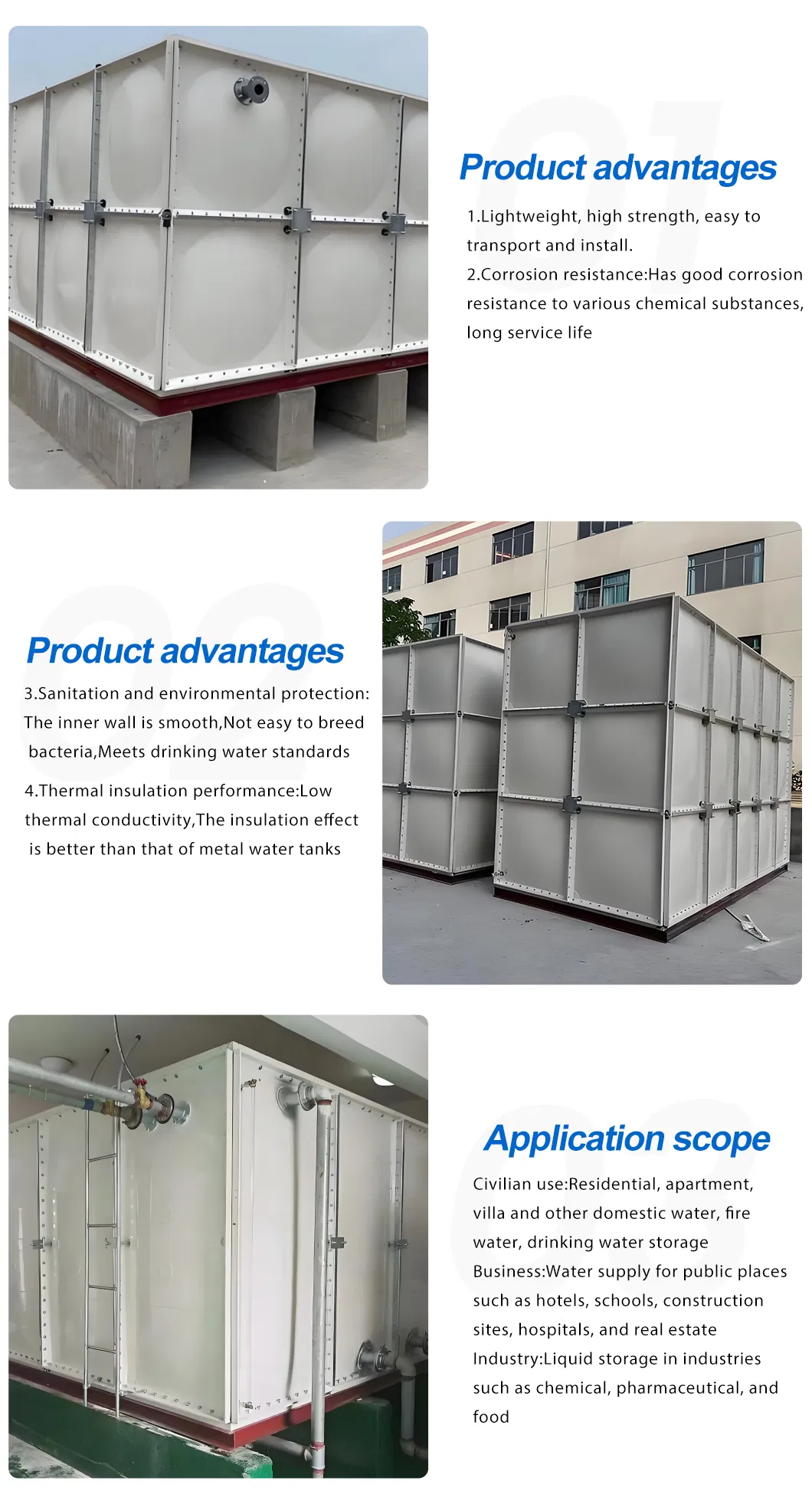
When specifying a modular water storage tank, two of the most popular materials are GRP/SMC (fiberglass composite) and stainless steel. Both are proven, reliable options — but they excel in different applications. Understanding their strengths and limitations will help you make the right choice for your project.
Material Overview
Stainless Steel Tanks
Constructed from SUS304 or SUS316 panels with embossed reinforcement patterns. Panels are bolted together with food-grade sealing gaskets. Stainless steel offers the highest corrosion resistance and is the gold standard for potable water applications.
GRP / SMC Tanks
Made from Glass Reinforced Plastic or Sheet Molding Compound — a fiberglass composite material molded into rigid panels. SMC panels feature convex dome patterns for structural strength. GRP tanks are significantly lighter than steel equivalents.
Head-to-Head Comparison
Corrosion Resistance
Stainless steel wins decisively, especially SUS316 in chloride-rich environments (coastal areas, pools). GRP is inherently corrosion-proof due to its non-metallic composition, but panel joints and hardware require quality sealing to prevent long-term issues.
Thermal Performance
GRP/SMC has natural insulating properties that reduce heat transfer — water stays cooler in summer and resists freezing longer in winter. Stainless steel conducts heat readily; insulation must be added separately if temperature stability is critical.
Weight & Structural Load
GRP panels weigh roughly 60% less than equivalent steel panels. This matters for rooftop installations, elevated platforms, and underground tanks where soil bearing capacity is limited.
Cost
GRP/SMC tanks typically cost 30–50% less than stainless steel for the same capacity. However, stainless steel's longer lifespan often delivers better total cost of ownership over 20–30 years.
Installation Flexibility
Both use modular bolt-together assembly. GRP's lighter panels are easier to handle on-site, especially in confined spaces. Stainless steel panels require more labor but offer greater rigidity for very tall tank configurations.
When to Choose Stainless Steel
- Potable / drinking water storage requiring NSF or WRAS certification
- Pharmaceutical, food processing, or hospital applications
- Coastal or high-chloride environments (use SUS316)
- Projects where maximum service life (30+ years) is prioritized
- Fire sprinkler systems in commercial high-rises
When to Choose GRP / SMC
- Domestic and commercial buildings with budget constraints
- Underground or semi-buried installations
- Applications where thermal insulation is beneficial
- Rooftop installations with limited structural capacity
- Municipal water storage in moderate climates
Still Deciding?
Send us your project details and our engineers will recommend the optimal tank material and configuration — free of charge.
Get Expert Advice