
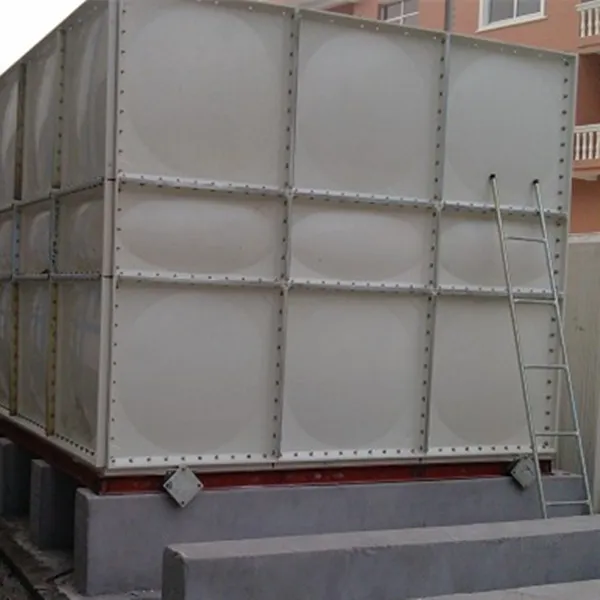
Underground water tank installation saves valuable surface space, keeps water cooler, and integrates cleanly into landscape and parking areas. GRP/SMC fiberglass sectional tanks are the preferred choice for buried applications — their non-metallic panels resist soil corrosion indefinitely and weigh far less than steel alternatives.
When to Choose Underground Installation
- Limited above-ground space in urban developments
- Aesthetic requirements — hide tanks under landscaping or driveways
- Temperature stability — soil insulation keeps water cooler in summer
- Freeze protection in moderate climates with adequate burial depth
- Large capacity needs (500–5,000 m³) without building tall structures
Site Preparation
Excavation
Excavate to tank dimensions plus 600–800mm clearance on all sides for assembly access and backfill compaction. Depth must account for frost line, groundwater level, and required cover (typically 300–500mm minimum soil cover above tank crown).
Foundation
Pour a level concrete slab (minimum 150mm thick, C25 concrete) sized to support the full water load. The slab must be flat within 5mm over the tank footprint. Install a perimeter drainage channel if groundwater is present.
Tank Assembly in the Pit
GRP panels are assembled inside the excavation from bottom to top:
- Position bottom panels on the concrete slab with base frame channels
- Bolt side panels row by row, installing EPDM gaskets between each joint
- Torque bolts to specification (typically 40–60 N·m for M12)
- Install internal bracing for tanks wider than 3m
- Fit roof panels, manholes, inlet/outlet connections, and vent pipes
- Pressure-test all joints before backfilling
Backfill and Waterproofing
Backfill symmetrically in 300mm layers, compacting each layer before adding the next. Use clean sand or fine gravel — never rock fill directly against panels. For high groundwater sites, apply external waterproof membrane and install a sump pump in the clearance space.
Semi-buried installations (tank partially above grade) require less excavation and simplify maintenance access while still reducing visual impact.
Access and Maintenance
Install lockable manholes flush with finished grade for internal inspection. Extend vent pipes above ground with insect screens. Provide valve chamber access for inlet/outlet isolation. Plan for pump removal clearance if a submersible pump is used.
Capacity Planning
Bolted GRP sectional tanks scale from 1 m³ to 5,000 m³ underground. Standard 1.0m × 1.0m panels allow rectangular configurations that maximize pit efficiency. For a 500 m³ tank, typical dimensions are approximately 10m × 10m × 5m (L × W × H).
Need Underground Tank Engineering?
YATAI GROUP provides foundation drawings, structural calculations, and installation guides for every underground GRP project.
Get Installation Support